
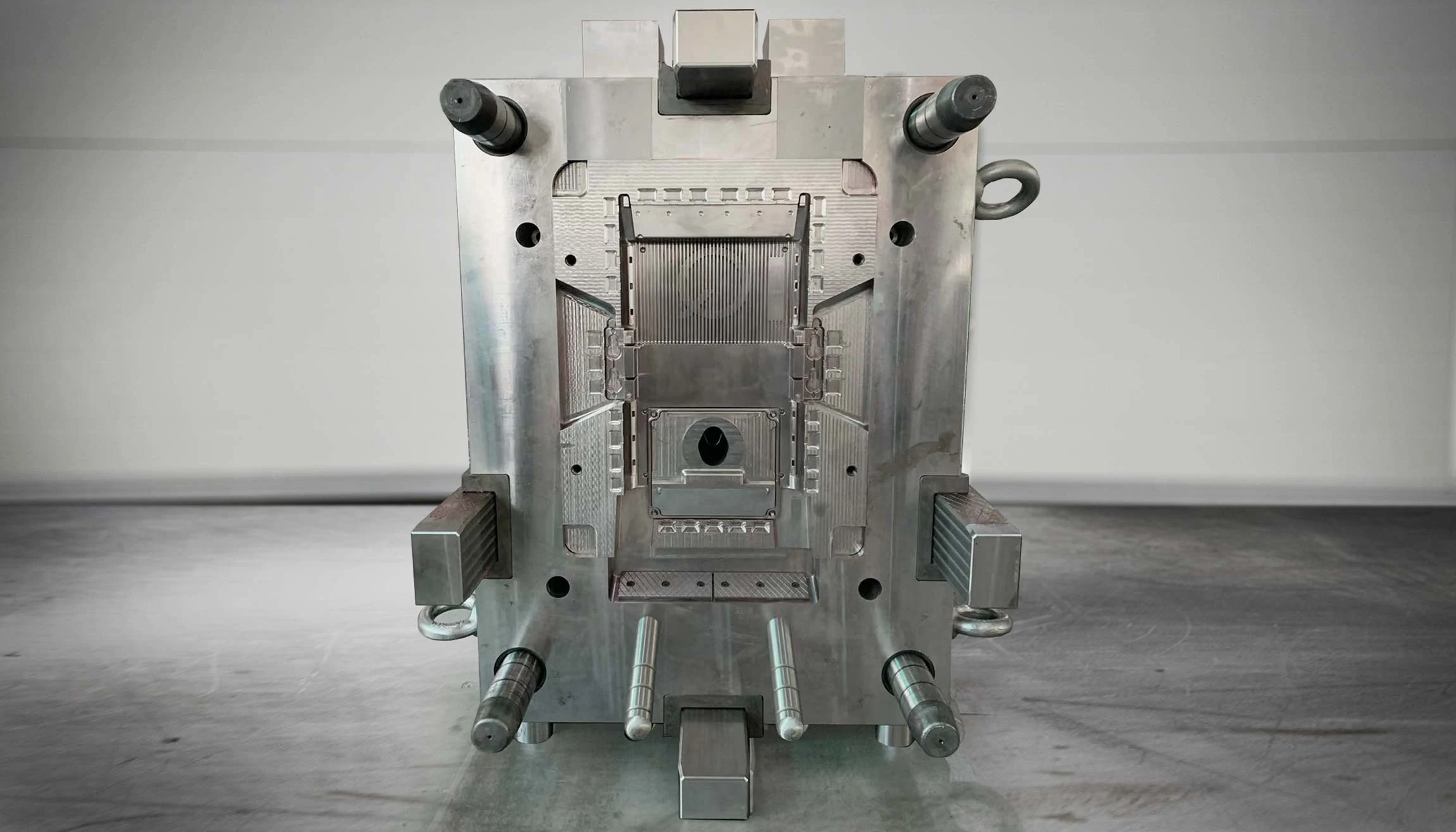
Pdat specializes in the design and manufacture of also molds for demanding technical metal products.
Our goal is to be involved already at the product design stage. This allows us to help the customer select the best technical solutions, taking into account the final product’s material and the production volume over its lifecycle.
The customer’s needs determine everything. Before mold manufacturing, we review together with the customer the product’s materials, production volumes, tolerances, and other requirements. This enables us to offer the optimal mold structure tailored to each customer’s specific needs. The actual requirement and intended use determine the methods.
Die-casting molds are not like machines that can be bought as catalog items. They must always be designed and manufactured specifically for the customer and the product.
See more about our die-casting services
We manufacture molds at Pdat’s own factory from tool steels and use standardized mold components. Mold surfaces are finished according to the customer’s requirements.
Die-casting mostly uses aluminum and zinc. The process differs significantly from injection molding.
Like injection molding, die-casting involves very high forces. The mold must be extremely durable. We select steel grades based on the raw material used and the production volumes. Die-casting molds are always made from hardened steel to withstand the highest possible stresses. In die-casting, temperatures range from over 400°C for zinc to over 700°C for aluminum at the hottest points.
Die-cast parts always require post-processing. Aluminum and zinc are raw materials in this context. There is practically no material waste in die-casting. Some waste occurs in post-processing machining, but it is minimal.
The best die-casting mold is designed to meet the customer’s exact needs:
The ultimate goal is to deliver a product that meets the customer’s technical and visual requirements while keeping production costs as reasonable as possible.
A good die-casting mold remains in good condition when properly maintained. Regular maintenance is at least as important as good product design. We sometimes see molds worth tens of thousands of euros that haven’t been serviced for years, leading to costly and extensive overhauls.
In recent years, Pdat has increasingly invested in maintenance services. Unlike most of our competitors, we have a comprehensive mold maintenance facility in our own factory. As a contract manufacturer, we can offer versatile mold maintenance and modification services performed in-house.
Since die-casting molds are not off-the-shelf products but custom-designed for the customer, they do not have fixed price tags. The price depends on the manufacturing method, materials used, and intended purpose. Naturally, a multi-cavity mold is more expensive than a single-cavity mold. Conversely, the unit cost of parts produced with the mold is lower if a multi-cavity solution is used. The final price always depends on the overall solution.
We help our customers optimize the design material for manufacturability. All molds are tested before delivery. Our Turku factory performs a commissioning check before final delivery.
We design and manufacture molds at our own factory and offer lifecycle services, including maintenance and modifications. Read more about our lifecycle services.
We have prepared a comprehensive maintenance manual for die-casting molds. It includes transportation and storage instructions and lists the items to check during minor and major maintenance. The manual documents all maintenance, modifications, and other actions performed on the mold. By following these instructions and performing regular maintenance, the mold maintains its condition and operational reliability for longer.
Pääskykalliotie 14
FI-21420 LIETO
Finland


Peetri 11,
10415 Tallinn
Estonia
Metangatan 1P
431 53 Mölndal
Sverige